
Chao Phraya Express Boat warns diesel at 35 baht a litre could force service suspensions
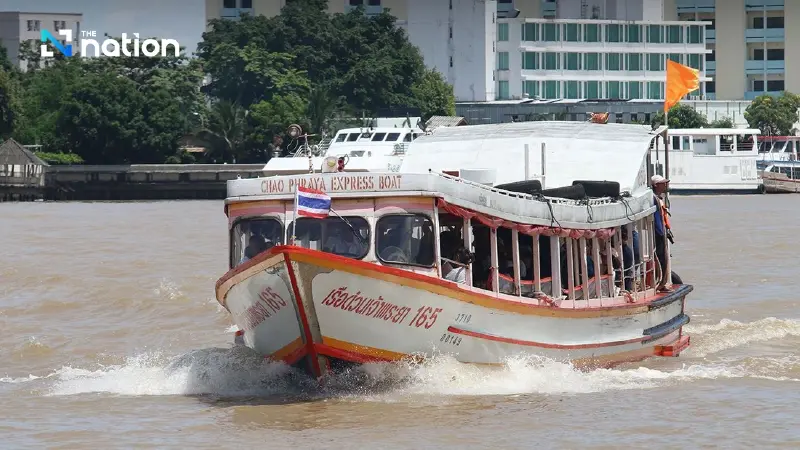


Chao Phraya Express Boat operator CPX says diesel costs of around 35 baht per litre, coupled with falling passenger numbers, are squeezing operations and could lead to route cuts or service stoppages unless costs ease.
Charoenporn Charoentham, managing director of Chao Phraya Express Boat Ltd (CPX), said the company has been hit by rising global oil prices linked to unrest in the Middle East, and warned that sustained high diesel costs could force the operator to reduce services or even halt operations.
He said the main pressure comes from higher fuel costs and uncertainty over future supply volumes, adding to broader cost burdens faced by the company and other operators.
At the same time, CPX has seen passenger numbers decline, including among job seekers and tourists, partly due to government work-from-home measures. Travel behaviour has also shifted, she said, with passengers increasingly choosing alternatives such as rail services, which the government has supported through fare reductions as part of cost-of-living measures.
Charoenporn said CPX is currently buying diesel at around 35 baht per litre through wholesale traders, or jobbers, which is above a level the company can sustainably manage.
“Diesel should not be above 32 baht per litre for us to cope and continue holding fares,” he said.
Current fares remain at long-standing levels:
- Orange Flag boat: 16 baht
- Yellow Flag boat: 21 baht
He said fares have not been raised for a long period, since diesel prices moved above 29 baht per litre.
On the Transport Ministry’s policy direction on fare controls, Charoenporn said that as a private operator, CPX cannot sustain long-term losses. If it is required to keep fares frozen while fuel costs push the business into prolonged deficit, it may have no choice but to suspend services.
“We are a private business. If we operate at a loss, we cannot keep doing it. If losses are long-term, we would not know why we should continue,” he said. “If it is short-term, we can still consider it. But if we must stop services because we are not allowed to adjust fares while fuel losses continue, the public may not be severely affected because river transport is only one option.”
In the short term, CPX is focusing on internal cost-saving and securing enough fuel to keep services running.
For the longer term, the company is studying the viability of investing in electric boats to reduce reliance on oil. It may also consider cutting the number of trips if fuel prices remain high, though it would need to assess the impact carefully to avoid undermining demand.
Charoenporn said the company is seeking support in two areas:
- Greater understanding that private operators cannot absorb losses in the same way state agencies can.
- A stronger focus on ensuring sufficient fuel supply and keeping prices at a manageable level for public transport operators, so services can continue without worsening the cost of living for the public.
