
Top execs offer guide to AI and other innovations driving Thailand’s development


Artificial intelligence (AI) and digital innovations are crucial to Thailand’s future development and sustainability targets, executives of leading corporations and organisations said on Tuesday.
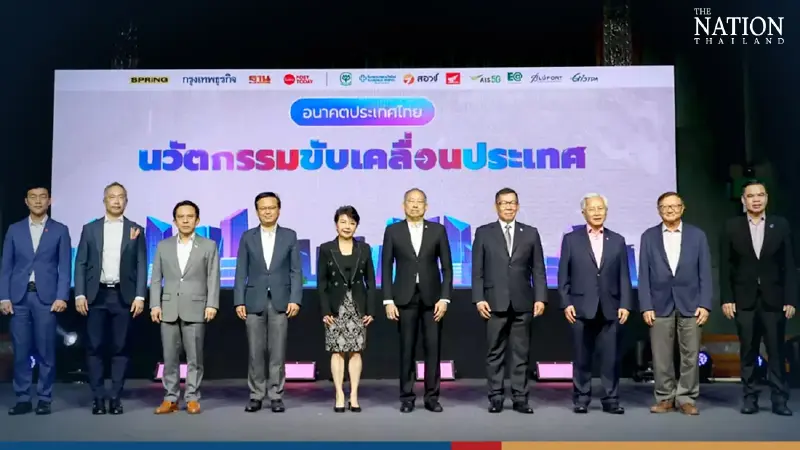
The top execs were speaking at the seminar “Thailand’s Future: Innovations for Steering the Nation”, jointly held by Spring News and Nation Group media outlets Thansettakij and Post Today, at the Grand Hyatt Erawan Bangkok Hotel.
Key speakers included Suwannee Singluedej, president & CEO of Siemens Thailand; Dr Kitipong Promwong, president of the National Higher Education Science Research and Innovation Policy Council; Dr Pakorn Apaphant. executive director of the Geo-Informatics and Space Technology Development Agency (Gistda); Dr Chawapol Jariyawiroj, president of Huawei Technologies Thailand; and Dr Sunthorn Srita, director of Ruamjairak Hospital.

The goal is the threshold for sustainable development Thailand ratified at the 2021 UN Climate Change Conference (COP26). Net zero means cutting greenhouse gas emissions as close to zero as possible, with any remaining emissions re-absorbed from the atmosphere by forests and other means.
Suwannee said she was encouraged to see that the government had initiated several projects to help the private sector reach net zero.

The plan is to create a skilled workforce to help boost the number of digital innovation businesses. The aim is to lift Thailand from its middle-income trap and help the country hit the net zero target while at the same time increasing income and benefits for the grassroots, Kitipong said.

Pakorn explained that space expertise and satellite technologies acquired by Gistda can be used for smart farming as well as national security.

He said this was causing fast and continuous change to daily life in the form of digital disruption of businesses. Customer behaviour was adapting to the technological changes, he added.
Chawapol said the rapid pace of technological development was creating new tools to boost security. 5G wireless connection, cloud storage and AI would help business operations move faster with more convenience.

Sunthorn said medtech trends include new AI applications for diagnoses and treatment, nano precision medicine, Internet of Medical Things (IoMT), teleconsultations and telemedicine, big data, and virtual/augmented reality in healthcare.
