
Subsidies to blame for slump in Thai agriculture competitiveness: expert
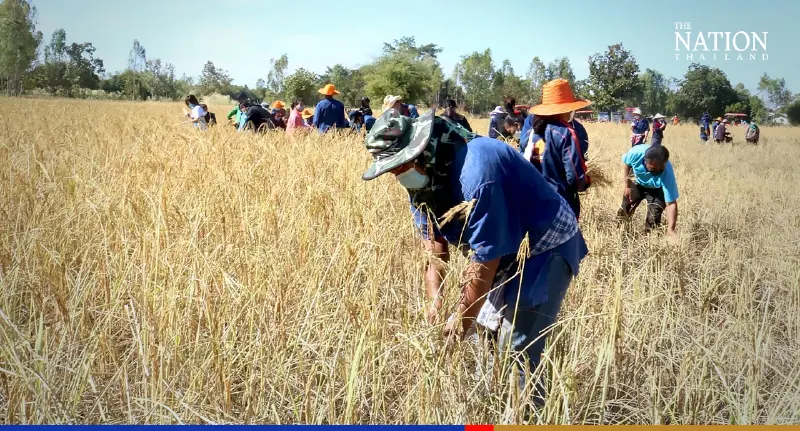


Populist policies like generous subsidies for farmers are being blamed for Thailand’s drop in global agricultural competitiveness for the first time in two decades.
Assoc Prof Witsanu Attavanich from Kasetsart University’s Faculty of Economics said Thailand is now lagging behind many Asian countries, including its neighbours, in terms of its agricultural green total factor productivity (AGTFP).
AGTFP, a key aspect of sustainable agricultural development, measures the agricultural output produced from the combination of land, labour, capital and material resources employed in farm produce.
Witsanu, who is an expert in climate change and agriculture, said Thailand’s AGTFP index fell below the global average for the first time in 2020, citing the US Department of Agriculture’s latest International Agricultural Productivity report released earlier this month.
He said that before 2020, Thailand’s AGTFP often exceeded the global average. Now, he said, countries like Vietnam, Cambodia, Laos, Myanmar, Indonesia, China and India have all outperformed Thailand.
The academic added that key reasons for Thailand’s poor performance were agricultural policies that focused on market intervention and unconditional financial aid for farmers.
“These policies are aimed at wooing voter support,” he added.
The populist policies, he said, included the rice price-pledging scheme, debt moratorium for farmers and compensation for lost income. He said these policies require more than 100 billion baht per year and have weakened the country’s agricultural productivity and output quality as there are no conditions for farmers to change their behaviour and improve their harvests. As a result, farmers continue to be poor with rising household debts.
The academic said the only way Thailand can improve its competitiveness sustainably is if it sets conditions for farmers to be eligible for government aid and subsidies. For instance, he said, to be eligible farmers can be told to follow good agricultural practices, refrain from burning farm waste and adopt digital technology.
