
Thailand interested in BRICS partnership, says Russian ambassador
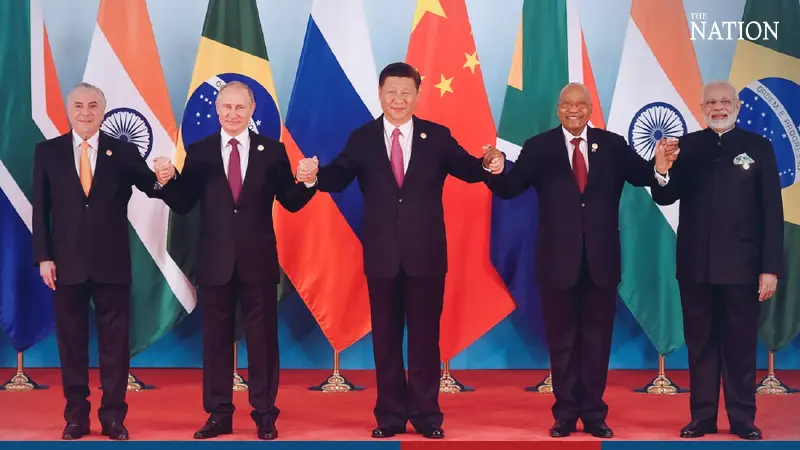


Thailand has expressed a desire for closer ties with the BRICS bloc, Russia’s ambassador in Bangkok Evgeny Tomikhin told The Nation in a sit-down interview.
Russia will host the BRICS Summit in October next year, where six new members – Argentina, Iran, Saudi Arabia, United Arab Emirates, Egypt and Ethiopia – are due to gain membership of the grouping.
The five-member bloc currently comprises Brazil, Russia, India, China and Russia.
But Thailand is among another 40 countries interested in upgrading their relationship with BRICS, Tomikhin told The Nation recently.
“These countries are interested in a much closer dialogue and cooperation in consultations concerning the most important issues of the national and international agenda. Russia is taking into consideration whether it will be full membership [for the countries in question], or it might be much closer cooperation and collaboration with BRICS,” he said.
The ambassador also gave an overview of what to expect from next year’s summit, saying Russia was aiming to strengthen “multilateralism for justice in global development and security”.

BRICS currency
At the last BRICS summit, in Johannesburg in August, participants and members expressed interest in forging a BRICS currency and more integrated trade system.
“What we see today not only from the BRICS countries but also many other countries in many continents, is that there is no guarantee for the stability of the international currency, aka US dollars, as a monopoly is always dangerous, Tomikhin said.
Russia’s economy has slumped in the face of sanctions applied by the US and other global democracies over its invasion of Ukraine last year.
BRICS, which was formed in 2010, offered an alternative to dollar hegemony based on mutual benefits for all members and associates, the ambassador said.
Through “decisions made on the principle of consensus during those 15 years, BRICS became a quiet, developed structure, with many mechanisms of consultations concerning regional stability, security, counterterrorism cooperation and economic cooperation.”
Next year’s summit will focus on central bank governance and also the possibility of establishing a financial mechanism for trade and transactions among BRICS members,” Tomikhin said.
The bloc would also develop innovations based on “phygital gaming”, or the combination of digital and real-world elements.
‘Multilateralism’
The summit’s motto of “strengthening multilateralism for justice in global development and security” would encompass about 200 events on political, economic and social matters in over 10 Russian cities.
Tomikhin said he holds regular meetings in Bangkok with ambassadors of other BRICS nations to prepare for the summit, focusing on Russia’s priorities and responsibility to incorporate new members and allies.
During its chairmanship, Russia would also work closely with its partners on foreign policy matters and in key international platforms, while also holding regular meetings of senior security officials. Russia, as host country, will work towards full implementation of the BRICS Economic Partnership Strategy until 2025.
Additionally, Moscow aims to establish new long-term cooperation guidelines focused on enhancing the role of the country in the international monetary and financial system. Efforts will be made to develop interbank cooperation, promote the use of national currencies, and foster collaboration between tax, customs, and anti-monopoly agencies.
The country is also committed to strengthening partnerships in the fields of science, innovations, healthcare, education, and humanitarian ties. He said Russia recognised the importance of cultural and civilisational diversity as a crucial aspect of the emerging multipolar world order. Consequently, efforts would be made to create an inclusive and open environment for cultural exchange, arts, and creativity.
