
Sitting on submarine procurement panel may be seen as a ‘go-ahead’, says MFP MP
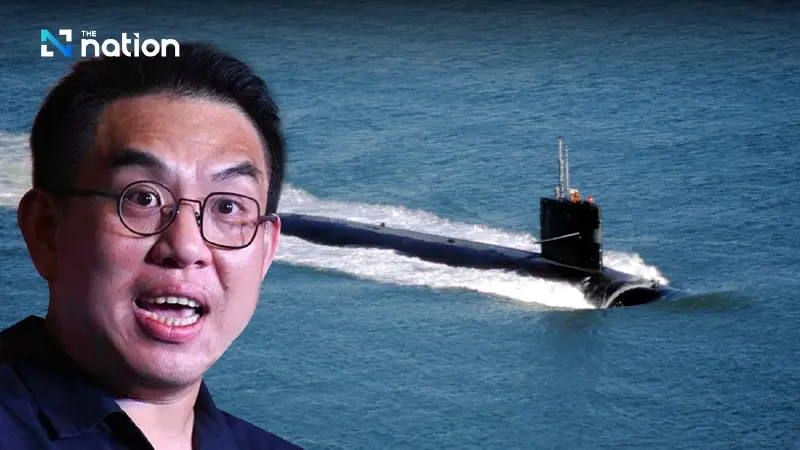


Move Forward Party MP Wiroj Lakkhanaadisorn said he felt uneasy about accepting Defence Minister Sutin Klungsang’s invitation to join the committee working on resolving contentious issues related to the Chinese submarine procurement.
Wiroj said on Tuesday that accepting the invitation may affect the checks and balances system between the executive and legislative branches of the government.
He also said that he fears his presence on the committee would give the defence minister an excuse to go ahead with the project.
“By principle, the legislative branch should not interfere in the works of the executive branch. The decision on the submarine procurement belongs to the defence minister,” Wiroj said.
“I’m concerned that opinions of the legislative branch will be used as a reference point for the executive branch to make decisions. This will immediately destroy the checks and balances system.”
The submarine project hit a significant setback when Germany pulled back from supplying a diesel engine for the vessel. German law restricts the use of German-made engines in weaponry made by foreign nations, thus stopping it from being mounted on Chinese submarines.
In response to the prohibition, China proposed a locally manufactured engine as an alternative, a proposition that was rejected by the Royal Thai Navy.
In a move to end the impasse, the Thai Navy proposed acquiring a frigate from China, but the plan was put on hold due to the additional 1 billion baht cost associated with the frigate.

Wiroj said he has no conflicts with Sutin, but wanted to preserve the checks and balances system. Hence, he said, the submarine procurement project should be checked by the standing House committees on military affairs and national security instead.
However, Wiroj chose not to reject the invitation right away, saying he must first consult with other Move Forward MPs before discussing the issue with Sutin later.
