
Biden, McCarthy debt ceiling meeting postponed, spending cuts on table
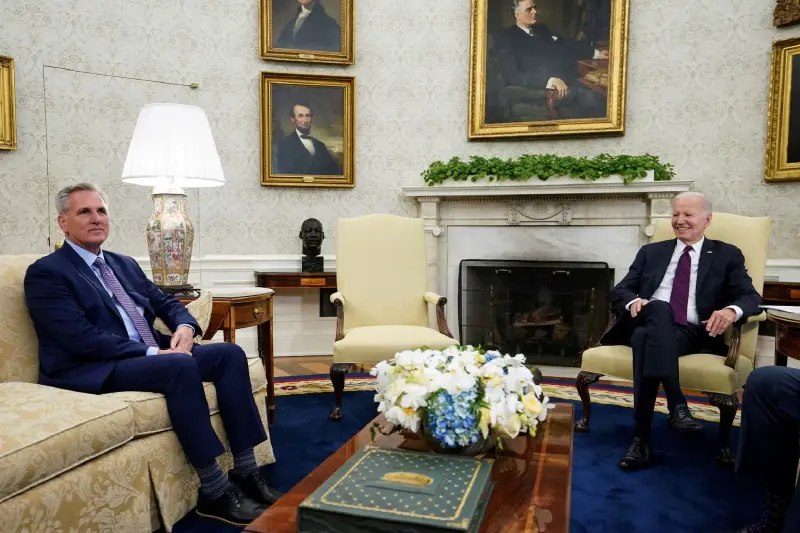


A debt limit meeting between US President Joe Biden and top lawmakers that had been scheduled for Friday has been postponed, and the leaders agreed to meet early next week, a White House spokesperson said on Thursday.
Aides from both sides have started to discuss ways to limit federal spending, as talks on raising the government's $31.4 trillion debt ceiling to avoid a catastrophic default creep forward, people familiar with the discussions said.
The aides to Biden, Republican House Speaker Kevin McCarthy, Democratic Senate Majority Leader Chuck Schumer, top Senate Republican Mitch McConnell and top House Democrat Hakeem Jeffries met Wednesday and Thursday to discuss raising the debt ceiling, the White House said earlier.
McCarthy told reporters at the Capitol that the delay was not a sign of trouble in the talks but that he believed the staff negotiators who had been meeting this week needed to continue to talk before the principals met again.
"I don't think there's enough progress for the leaders to get back together," he said. He also said one of the Congress members wasn't able to make the Friday meeting.
White House officials acknowledge that they must accept some spending cuts or strict caps on future spending if they are to strike a deal, two sources said, while insisting they must preserve Biden's signature climate legislation that passed along party lines last year.
The House Republican bill to suspend the borrowing limit passed in April would cut government spending to 2022 levels, cap its future growth below inflation and repeal incentives for renewable energy, electric vehicles and other climate-friendly technology passed in the Biden legislation.
The two sides are also debating how long to push out the next potential debt ceiling showdown, sources said. Biden and Democrats would prefer a two-year window, pushing any legislative action beyond the 2024 presidential election, but they may have to accept larger spending cuts or stricter caps to get more time, the sources said.
The fact that spending cuts and caps are under discussion could be a sign of progress in talks where Democrats have long pushed for an unconditional lifting of the debt ceiling, while Republicans have demanded a slew of policy changes in addition to sharp spending cuts.
The White House portrayed the postponement as a positive development, with meetings progressing.
Reuters
