
Biden 'confident' of reaching deal to avert default on US debt
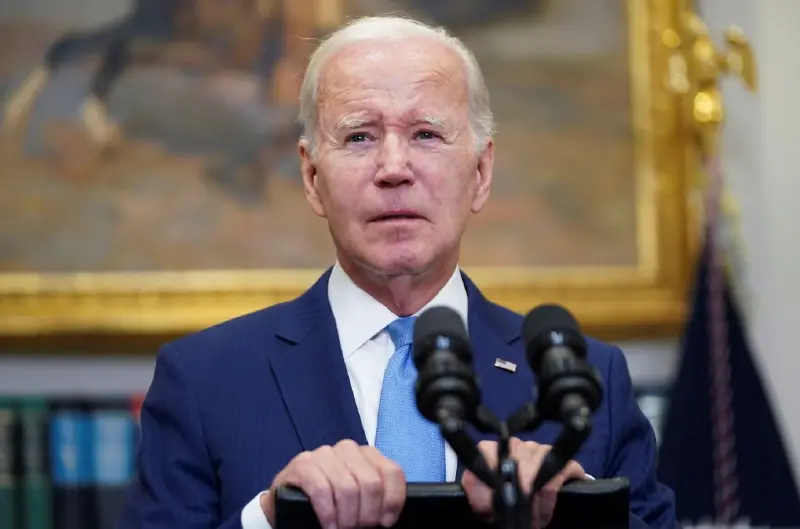


President Joe Biden and top US congressional Republican Kevin McCarthy said on Wednesday they aimed to reach a deal by Sunday to raise the federal government's $31.4 trillion debt ceiling and avoid an economically catastrophic default.
After a monthslong standoff, the Democratic president and the speaker of the House of Representatives on Tuesday agreed to negotiate directly on a deal. An agreement needs to be reached and passed by both chambers of Congress before the federal government runs out of money to pay its bills, as soon as June 1.
Republicans, who control the House by a 222-213 majority, for months had been insisting that Democrats agree to spending cuts in exchange for a deal to raise Congress's self-imposed debt limit. The limit needs to be lifted regularly because the government spends more than it takes in taxes.
Asked by reporters at the Capitol whether it's possible to reach a debt ceiling deal by the time Biden returns from a trip to Asia on Sunday, McCarthy replied, "It's doable."
"We're on such a short timeline," McCarthy said. "It makes it almost harder. But there's one thing you know, for me, I never give up. I have the grit, the perseverance and we're gonna get it done."
The two-way conversation streamlines the prior five-way format of the past week that included the three other top congressional leaders.
Biden left on Wednesday for the Group of Seven summit of world leaders Friday through Sunday in Japan. Before departing, he said he would speak with top lawmakers by phone while at the meetings and would meet with top lawmakers again on his return.
On Tuesday, Biden and McCarthy met for about an hour at the White House with Senate Majority Leader Chuck Schumer, Senate Republican leader Mitch McConnell and House Democratic leader Hakeem Jeffries.
"We're going to come together because there's no alternative," Biden told reporters at the White House.
Financial markets appeared to be buoyed by those discussions, with US stocks higher on Wednesday, partly due to cautious optimism among investors as talks continued.
The US Treasury has said it could start running out of funds as early as June 1 to pay the government's bills -- a move economists fear will trigger a recession.
Negotiators are aiming to hammer out an agreement before Biden's scheduled return to Washington on Sunday. Congress would then have to act swiftly before the June 1 deadline hits.
McCarthy said the House would vote first on any deal before sending it to the Senate, which Biden's Democrats control by a 51-49 margin, for approval. Senate rules would require at least nine Republicans to go along with any deal.
Negotiations are continuing over the longevity of any deal, work requirements for aid programs for the poor, including food subsidies, and spending caps.
Biden and congressional leaders' staff have met several times over the past week on the issue. Going forward, the talks will be narrowed for more engagement between House Republicans and the White House, McCarthy said. "We've narrowed the group," Biden said.
Continued uncertainty around the debt ceiling prompted Biden to skip stops in Papua New Guinea and Australia after he attends a Group of Seven summit of the world's richest countries in Hiroshima, Japan.
Ahead of the meeting, sources said Biden and McCarthy's aides had discussed the requirements for two key programs that provide food and cash aid to families.
Expanding the work requirements has been a key demand of Republicans who are also pushing for spending cuts in exchange for their votes to raise the debt limit.
"I'm not going to accept any work requirements that are going to impact on medical health needs of people," Biden said, "but it's possible there could be a few other, but not anything of any consequence."
McCarthy told reporters on Tuesday that his party, which controls the House by a 222-213 margin, would only agree to a deal that cuts spending.
In addition to work requirements for some benefit programs for low-income Americans, spending caps and changes to energy permitting have been proposed in exchange for votes to lift the limit, according to people briefed on the talks.
The sources, who spoke on condition of anonymity to reveal details about closed-door negotiations, said the work requirement talks focus on the Supplemental Nutrition Assistance Program (SNAP), previously known as food stamps and the Temporary Assistance for Needy Families program.
A similar 2011 standoff over the debt limit led to a historic downgrade of the US credit rating, sparking a sell-off in stocks and pushing the government's borrowing costs higher.
The current deadlock has rattled investors, sending the cost of insuring exposure to US government debt to record highs. A Reuters/Ipsos poll completed on Monday found that three-fourths of Americans fear a default would take a heavy toll on families like theirs.
Reuters
