
Thai ‘dark horse’ products become favourites for Chinese travellers
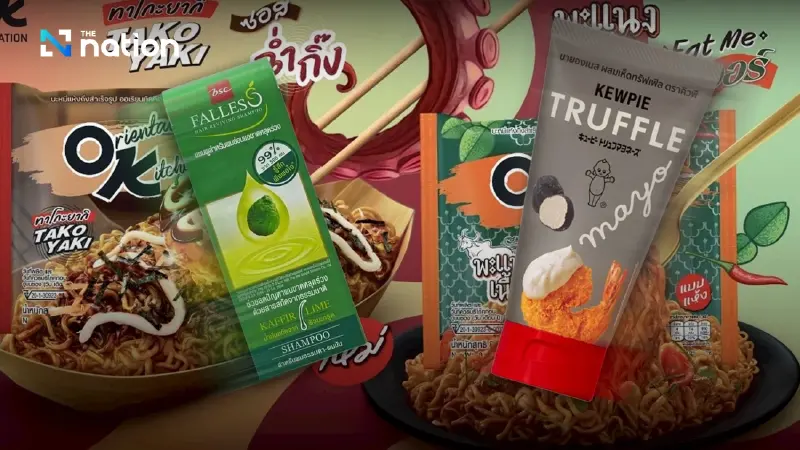


Mango China unveils top Thai products loved by Chinese tourists, from Kewpie mayonnaise and shampoo to instant noodles.
- Kewpie Mayonnaise became a popular souvenir due to unique, Thai-exclusive flavors like Sriracha and Truffle that are unavailable in China.
- Thai shampoos saw a surge in sales after shifting their marketing message from hair loss to a "3-day fresh scent," which better suited the lifestyles of Chinese consumers.
- Mama Instant Noodles were successfully promoted as a "Thai food collection," encouraging tourists to purchase the entire range of flavors, not just the well-known Tom Yum.
In an era where digital is the primary driver of marketing, Thai entrepreneurs must effectively leverage social media opportunities.
This is particularly critical as the purchasing power of the new generation of Chinese consumers grows yearly, with this group rapidly embracing new products and trends.
To ensure Thai products become highly sought after, a clear strategy and a powerful Key Message are essential.
At the recent ScaleFast Summit & Expo 2025, Panicha Prateepavanich from Mango China Group took the Strategy Stage to reveal her market penetration strategy for the Chinese market.
She highlighted three products currently booming in China, demonstrating that success doesn't stem from massive advertising but from a deep understanding of Chinese consumer behaviour and a strategic shift in communication.
Some successful products were initially "Dark horses" that many overlooked, yet they became viral must-buy items for Chinese tourists visiting Thailand:

1. Kewpie Mayonnaise: "Unique Flavours Unavailable in China"
While Kewpie is a Japanese brand and not new to the Chinese, its Thai success story lies in its unique flavour variations not sold in mainland China, such as Cheese, Sriracha, or Truffle.
These flavours appeal to modern Chinese consumers who are quickly adopting new dining cultures. This led to a wave of organic reviews and word-of-mouth recommendations, with many Chinese tourists stocking up and taking them home.
Recognising this trend, Mango China amplified the promotion, turning these mayonnaise flavours into highly coveted goods across China, Hong Kong, Singapore, and the Philippines.

2. Thai Shampoo: Shifting the Key Message to "3-Day Fresh Scent"
Consider Falles Green Shampoo. The initial communication focused on hair loss reduction, a topic that didn't resonate much with Chinese consumers, who tend to prefer traditional Chinese medicine for such issues.
The turning point came with a new Key Message: "Fresh and Scented for 3 Days After One Wash."
This message directly addresses the lifestyle of Chinese consumers, particularly those in colder regions or with living constraints that make daily hair washing inconvenient.
This subtle shift, rooted in a deep understanding of their context and lifestyle, led to an explosive growth in sales because it perfectly met a hidden consumer need.

3. Mama Instant Noodles: The "Thai Food Collection"
Mama serves as an example of intelligently building upon existing success. Chinese consumers already widely associate Mama (especially the Tom Yum Kung flavour) with delicious, authentic Thai food.
The key pivot was not to stop at one flavour, but to expand the meaning of Mama to represent a diverse range of Thai cuisine, introducing flavours like Penang Beef Curry, Yentafo, or Pad Thai.
These three examples show how trends, often initiated on the primary platform Xiaohongshu, created market buzz. Chinese consumers now understand that to fully experience Thai cuisine, they must purchase a "full set" of Mama, every flavour, not just one. The result is that all Mama varieties have become popular souvenirs, seen as the perfect "Thai food kit."
The Key to the Chinese Market: Be on Their Platforms
Panicha concluded with critical advice for Thai entrepreneurs: Choose the right platform. Many Thai brands mistakenly report success based on Facebook follower counts, forgetting that these platforms are inaccessible in mainland China.
The indispensable platform is Xiaohongshu (Little Red Book). Highly popular among young Chinese women for sharing lifestyle content and product reviews, it drives rapid Social Commerce.
The main strategy is to generate buzz on Xiaohongshu while ensuring products are easily accessible at key retail points like Big C or 7-Eleven.
This setup encourages Chinese tourists to see the trend, purchase the item, and then naturally share it, completing the viral loop.
Understanding consumer behaviour, communicating the right message, and leveraging the correct platform is the formula that transforms ordinary Thai products into "must-buy" items for Chinese tourists and a sustainable path to broader popularity.
