
King Charles strips Prince Andrew of titles and Windsor home amid Epstein fallout
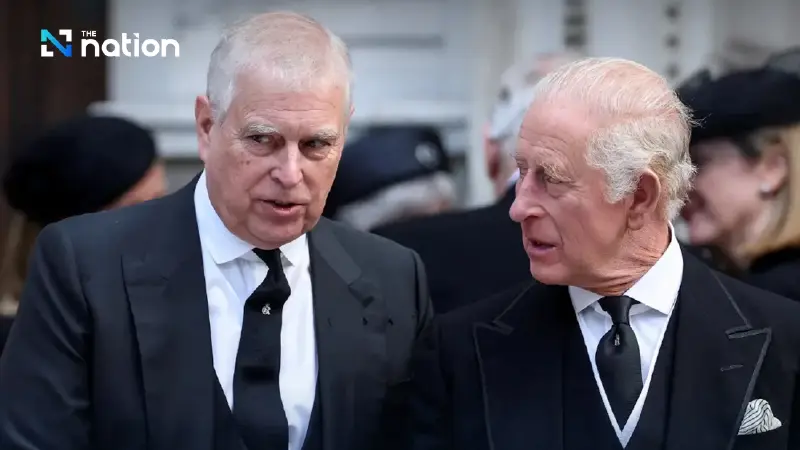


Britain’s King Charles has taken the unprecedented step of removing all royal titles from his younger brother, Prince Andrew, and ordering him to vacate his residence at Royal Lodge in Windsor, Buckingham Palace announced on Thursday.
The move marks a decisive attempt by the monarch to distance the royal family from the lingering Jeffrey Epstein scandal.
Andrew, 65, the second son of the late Queen Elizabeth II, has faced growing scrutiny in recent years over his association with the late American financier and convicted sex offender. Earlier this month, he was stripped of his title as Duke of York.
In a statement, the palace confirmed that Andrew will now be known simply as Andrew Mountbatten-Windsor. A formal notice has also been issued for him to surrender his lease on the Windsor estate property, where he has lived for decades. He is expected to relocate to private accommodation at Sandringham in eastern England.
The decision, made as King Charles continues treatment for cancer, is one of the most striking disciplinary actions taken against a senior royal in modern times.
“These measures are necessary despite his continued denial of the allegations,” the statement said. “Their Majesties wish to express their deepest sympathy to all victims and survivors of abuse.”
Once celebrated as a decorated naval officer who served during the Falklands War, Andrew’s public standing began to erode in 2011 when he gave up his post as the UK’s special trade envoy. In 2019 he withdrew from public life entirely, and by 2022 had lost his military affiliations and royal patronages following allegations of sexual misconduct—claims he has consistently denied.
That same year, Andrew reached an out-of-court settlement with Virginia Giuffre, who accused him of sexually abusing her as a teenager. Giuffre, who died in April, recounted her story in a posthumously published memoir, alleging that Andrew viewed intimacy with her as a “birthright.”
Her family has vowed to “continue Virginia’s battle” and called for all individuals linked to Epstein and Ghislaine Maxwell to be held accountable.
Fresh controversy erupted this month after the Mail on Sunday and The Sun published 2011 correspondence between Andrew and Epstein, in which the prince suggested they should “keep in close touch” and “play some more soon.”


A royal insider said that while Andrew maintains his innocence, “serious lapses of judgment” were clear. The source added that the King acted with the support of the wider royal family, including Prince William, the heir to the throne.
Reports have also highlighted that Andrew had not paid rent on his 30-room Windsor mansion for nearly two decades, despite funding renovations early in his tenure. The decision to remove him followed a parliamentary committee’s inquiry into whether it was appropriate for him to continue occupying the residence.
With polls showing waning support for the monarchy among younger Britons, analysts suggest the King’s move reflects a broader effort to protect the institution’s credibility.
The royal family has weathered similar crises before. In 1936, King Edward VIII abdicated just over a year after ascending the throne to marry American divorcée Wallis Simpson. He retained the title Duke of Windsor but lived largely in exile.

