
Organic farming becomes a new pillar in the global food trade
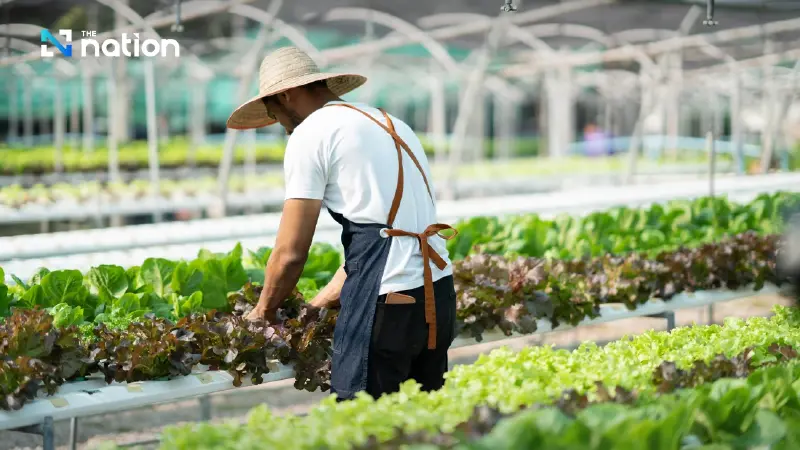


TPSO says the global organic market keeps expanding despite economic volatility, while tougher EU rules and uneven regional output are reshaping competition.
- The global organic food and drink market has grown to a record US$157 billion, with organic farming now covering 2.1% of total agricultural land, establishing it as a core part of the modern food system.
- Despite overall growth, the sector faces challenges including rising production costs, stricter EU trade regulations, and an imbalanced regional expansion with farmland contracting in Asia and Africa while growing in North America.
- Strong consumer demand, with the U.S. as the largest market, and major policy initiatives like the EU's "Farm-to-Fork" strategy are driving the shift towards organic standards in global trade.
- Organic agriculture is increasingly viewed as a "new standard" for global trade in the sustainability era, forcing countries to adapt their production and policies to remain competitive.
“Organic agriculture” is moving beyond its status as a niche product to become a “core structure” of the modern global food system, reflecting data from Thailand’s Trade Policy and Strategy Office (TPSO) under the Ministry of Commerce, which points to continued growth in the organic market despite volatility in the global economy.
Nantapong Chiralerspong, director general of the TPSO, said the global organic food and drink market had reached a new record of 145 billion euros, or around US$157 billion, while global organic farming area had expanded to about 619 million rai, accounting for 2.1% of total agricultural land. The number of organic producers worldwide had risen to 4.84 million, with Asia accounting for around 56% of the global total.
These figures show that “organic agriculture” is no longer merely an alternative, but has become a key mechanism in the food system, answering the demands of sustainability, environmental protection and food safety.
However, The World of Organic Agriculture 2026 also reveals a strikingly contrasting picture, with organic farmland in some regions beginning to contract. Africa recorded a 17.6% decline and Asia a 4.8% drop, while North America expanded by as much as 30%, reflecting an imbalance in production structures across regions.
The main pressures stem from rising production costs, climate risks and, in particular, the European Union’s new trade rules under EU Organic Regulation 2018/848, which have shifted the framework from “equivalence” towards stricter compliance. This has made certification more complex and more costly, especially for small farmers in developing countries.

Amid these constraints, Participatory Guarantee Systems (PGS) have emerged as a rapidly growing alternative in many regions, especially in Asia and Latin America. They help small farmers gain easier access to local markets, although they still cannot fully replace international certification for premium export markets.
On the market and consumption side, growth remains strong. The United States remains the largest market at US$65.4 billion, followed by Germany and China, with France also among the leading markets. Switzerland has the world’s highest per capita consumption at US$520 per person and the highest market share at 12.3%, reflecting European consumers’ continued willingness to pay for certified organic products.
In international trade, the Research Institute of Organic Agriculture (FiBL) said organic imports into the European Union and the United States had risen to 5.89 million tonnes, up 12.3%, with key exporters including Mexico, Ecuador and Canada. Major product groups continued to include bananas, oilseed cake and sugar.
The trend is in line with global policy direction, especially the European Union’s Farm-to-Fork strategy, which aims to increase organic farmland to 25% by 2030. Together with a market already worth about US$157 billion, this is likely to accelerate the shift towards organic standards becoming a core rule of global trade.
Nantapong said the continued growth in the global organic market and organic farming area should serve as a warning signal to Thai businesses and the Thai government, as the world food system is now shifting decisively towards full-scale “agroecological farming”.
Strategically, Thailand needs to accelerate the upgrading of production standards, reduce certification costs, develop its domestic market structure and position Thai organic products more clearly within global supply chains, so as not to miss out on a fast-growing market.
The key conclusion is that “organic agriculture” is not merely a short-term trend, but a “new standard” of the global trading system in the sustainability era. Countries that adapt quickly will gain a long-term advantage, while those that move too slowly risk being left behind on the global trade stage.
