
Malaysia to suspend imports of five Thai shrimp species from June 1


New Malaysian measures will require analysis certificates for Thai sea bass and restrict five shrimp species, raising oversupply concerns.
- Beginning June 1, 2026, Malaysia will suspend all imports of five specific Thai shrimp species, including giant tiger prawn and whiteleg shrimp.
- The suspension is a reciprocal trade measure in response to similar import restrictions previously placed on Malaysian shrimp by Thailand.
- The import ban will continue until Thai agencies submit a completed food-safety standards questionnaire to Malaysian authorities for reassessment.
- This action is expected to cause a loss of revenue for Thai exporters and could lead to a domestic oversupply of shrimp in Thailand.
Thailand’s seafood export market has been shaken after Malaysia announced strict new measures from Monday (June 1, 2026), affecting Thai sea bass and five shrimp species and raising the risk of domestic oversupply.
Import curbs on sea bass and five shrimp species as a trade response
The Office of Commercial Affairs in Kuala Lumpur reported that Malaysia is preparing to enforce strict controls on seafood imports from Thailand from Monday.
The measures are described as a trade response and an upgrade of national food safety safeguards.
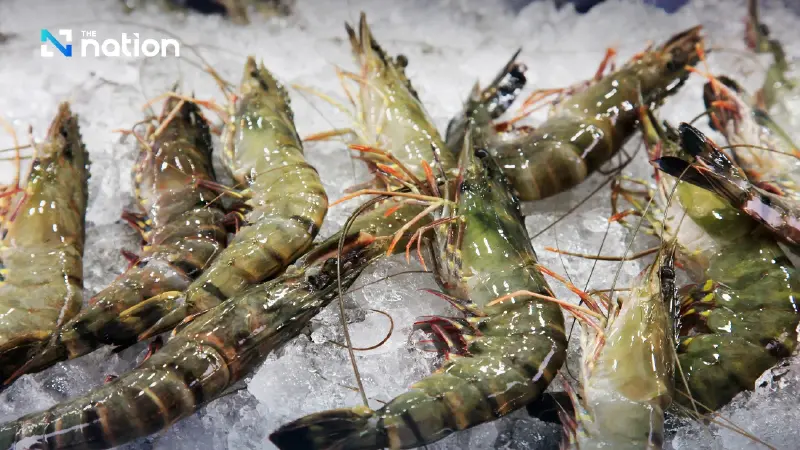
The seafood covered by the restrictions focuses on sea bass and five shrimp species: brown tiger prawn, banana prawn, whiteleg shrimp, giant tiger prawn and blue shrimp.
For the sea bass import measure, operators must attach a Certificate of Analysis to every import to confirm that the products meet the food safety standards of Malaysia’s Ministry of Health.
For the measure suspending shrimp imports, Malaysian authorities said it is being carried out as a reciprocal response because Thailand had previously imposed similar conditions on shrimp imports from Malaysia.

The import suspension will continue until Thai agencies submit complete responses to a food-safety standards questionnaire to Malaysian authorities, after which the measure will be reassessed.
Earlier, on Wednesday (May 13, 2026), the Fisheries Development Authority of Malaysia invited importers of sea bass and shrimp from Thailand, as well as representatives of relevant agencies, including the Department of Fisheries, the Ministry of Health and checkpoint agencies, to attend a meeting to explain the new guidelines so operators could prepare before the measures take effect.
The main aim of the tightened controls is to strengthen food safety and biosecurity, and to guarantee quality standards for imported fishery products in order to protect the interests of consumers and the domestic industry.
However, Malaysia’s Ministry of Agriculture and Food Security explained that all inspections and import suspensions at border checkpoints would be managed carefully to ensure they would not affect the supply of sea bass and shrimp for domestic consumption.

Domestic impact and oversupply concerns
The enforcement of the measures on Monday will affect Thailand’s seafood export supply chain in several dimensions.
In the short term, the sudden suspension of imports of the five main shrimp species will cause a direct loss of revenue from the Malaysian market if exports cannot proceed.
It could lead to domestic oversupply, which may put downward pressure on shrimp prices in Thailand, forcing farmers and exporters to urgently divert products to other alternative markets.
For sea bass exporters, the requirement to use a Certificate of Analysis will create hidden costs for Thai operators, including laboratory testing expenses and the time spent waiting for test results.
Operators advised to prepare
The office added that the measures would inevitably affect logistics costs and timelines, and urged Thai operators to prepare and adjust before Monday.
Sea bass exporters should urgently study Malaysia’s food-safety regulations and allow extra time to obtain a Certificate of Analysis (CoA) from recognised laboratories to prevent goods from being held up or spoiling because of delays in release at inspection checkpoints.
Exporters of all five shrimp species should temporarily suspend shipments of fresh and frozen products to Malaysia to prevent returns and accelerate distribution to alternative export markets or the domestic market to reduce the risk of oversupply.
Operators should also work closely with importers on the Malaysian side to update themselves on the latest guidelines and monitor progress on the Thai Department of Fisheries’ questionnaire response so they are ready to resume exports as soon as Malaysian authorities announce the lifting of the measures.
