
Asia's Food Revolution: Ten Trends Reshaping the Region's F&B Market in 2026
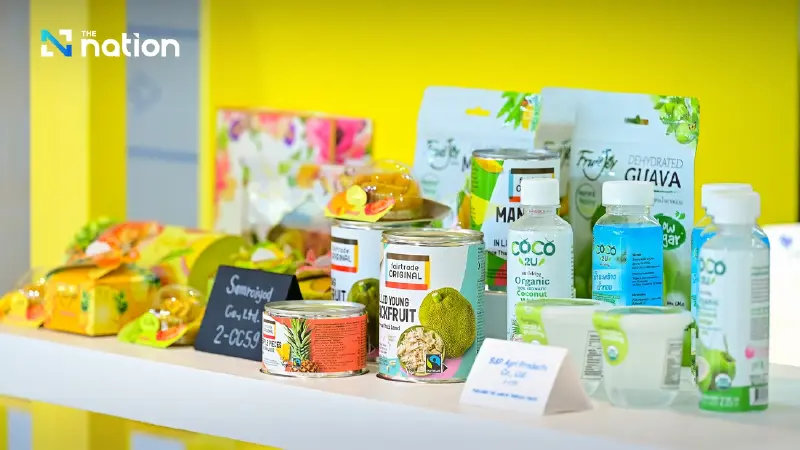


From gut health to cultural heritage, a sweeping new report from THAIFEX – Anuga Asia reveals how Asian consumers now demand far more than flavour from their food
- Asian consumers are prioritizing functional health benefits over mere flavor, seeking products that offer protein for overall wellness, improved gut health for immunity and mood, and beverages with specific purposes like relaxation or skin health.
- The concept of value is shifting from low price to a combination of quality, sensory indulgence, and emotional satisfaction, with a demand for multi-textured products that fit non-traditional eating schedules.
- There is a growing demand for products that connect to cultural heritage and tradition, alongside a requirement for transparent and provable sustainability claims, such as traceable sourcing and quantified waste reduction.
From gut health to cultural heritage, a sweeping new report from THAIFEX – Anuga Asia reveals how Asian consumers now demand far more than flavour from their food.
Taste alone no longer sells food in Asia. That is the central takeaway from the Top F&B Trends in Asia 2026 report by Netherlands-based research firm Innova Market Insights, unveiled at THAIFEX – Anuga Asia 2026, the continent's premier food and beverage trade forum.
Speaking on the Future Food Experience stage, Innova’s Fellicia Kristianti presented ten definitive trends reshaping the region.
She urged industry players to use these consumer insights as a strategic compass for product innovation, painting a detailed portrait of a consumer base that has grown increasingly discerning, health-conscious, and emotionally attuned to what it consumes.
According to Kristianti, a major shift is underway as consumers actively track nutritional labels to curb their sugar and salt intake. This health-first mindset is driving a wave of functional product innovations, particularly around protein enrichment.
For example, a long-established sterilized cow's milk brand in Indonesia recently captured market demand by launching a new variant fortified with collagen and vitamin C.
Ultimately, Innova's regional data reveals that the modern Asian consumer no longer evaluates food and drink on a single plane.
Instead, purchasing decisions are judged across multiple dimensions simultaneously: nutritional value, occasion-fit, cultural resonance, emotional reward, and demonstrable sustainability.

The ten trends
|
# |
Trend |
What it means |
1 |
Powerhouse Protein |
Protein expands beyond fitness into everyday snacks and ready-to-eat formats |
2 |
Gut Health Hub |
Digestive wellness connects to sleep, immunity, and mental health |
3 |
Layers of Delight |
Multi-sensory indulgence combining texture, aroma, and emotional comfort |
4 |
Beverages with Purpose |
Drinks must deliver function — skin health, energy, digestion, or calm |
5 |
Authentic Plant-Based |
Plants marketed on their own nutritional merits, not as meat substitutes |
6 |
Made for Moments |
Occasion-based formats suited to flexible, non-traditional eating schedules |
7 |
Worth Every Bite |
Value is perceived, not just priced — quality, joy, and utility all count |
8 |
Mind Balance |
Food and drink positioned for mood, relaxation, and cognitive wellbeing |
9 |
Crafting Tradition |
Culinary heritage repackaged for modern convenience and cultural pride |
10 |
Justified Choices |
Sustainability claims must be provable, specific, and tangible |

Health redefined
The protein narrative is perhaps the most commercially significant finding. Three in five Asian consumers are incorporating more protein into their daily routines, yet the drivers have shifted well beyond muscle-building.
Immunity, cognitive focus, healthy ageing, and mental clarity are now equally compelling motivations.
More tellingly, 44 per cent of consumers say naturalness or minimal processing is the most important attribute when selecting food and beverages — a signal that protein-fortified products laden with additives will face scepticism regardless of their nutritional claims.

Gut health follows a similarly expansive logic. More than half of Asian consumers regard digestive wellness as fundamental to overall health, connecting it to sleep quality, energy levels, and emotional stability.
The category is migrating far beyond yoghurt and probiotic drinks. South Korean manufacturers, for instance, are incorporating melatonin and functional fibres into carbonated beverages and snack formats, blurring the line between enjoyment and therapeutic function.

The pleasure premium
Indulgence has not retreated; it has simply grown more sophisticated. The Layers of Delight trend captures a consumer desire for food that engages multiple senses at once — crisp textures alongside creamy bases, familiar flavours given unexpected twists.
In Japan, consumers gravitate towards brown and caramel notes for comfort; in India, coffee leads. Brands that can deliver both sensory complexity and a clean ingredient list are in an unusually strong position, as naturalness now functions as the primary marker of "healthy indulgence" across the region.
Beverages are emerging as the most dynamic arena for this intersection of function and pleasure. Dairy drinks with collagen and vitamin C, protein-enriched liquid snacks, and prebiotic carbonates all point to a sector where hydration is merely the baseline expectation.
The segment is growing in strategic importance precisely because its format — portable, immediate, socially visible — suits both the health and the indulgence briefs simultaneously.

Value in a pressured economy
Economic anxiety looms across the findings. Some 32 per cent of Asian consumers cite affordability as their most important dietary consideration. Yet, the Worth Every Bite trend cautions against reading this as a simple race to the bottom on price.
Consumers under financial pressure are not abandoning quality — they are recalibrating what quality means.
Shareable formats, shelf-stable packaging, and single-serve portions are all rated highly for value perception. Brands that cut prices without preserving the sense of occasion risk losing the emotional dividend that sustains loyalty.

Culture, sustainability, and transparency
Two of the ten trends carry particular strategic weight for Asian and South-East Asian producers. Crafting Tradition reflects a moment when consumers, unsettled by economic and social uncertainty, are drawn to foods that carry cultural memory.
Traditional Indonesian dishes sold in tins, regional Thai ingredients positioned as premium heritage products, or time-honoured fermentation techniques communicated through modern packaging — all represent opportunities to convert cultural capital into genuine market differentiation.
Justified Choices, meanwhile, marks a maturation in the sustainability conversation. Vague environmental claims no longer carry credibility.
Consumers want evidence: traceable sourcing, quantified waste reduction, and named farming communities.

Singapore's speciality coffee sector has responded with portion-controlled drip formats explicitly designed to eliminate coffee waste — a granular, demonstrable commitment that resonates far more powerfully than broad corporate pledges.
The overarching conclusion is one of convergence. Asian consumers in 2026 are not choosing between health and pleasure, between value and ethics, or between the modern and the traditional. They expect all of it — and the brands best placed to grow are those with the depth and authenticity to deliver across every dimension at once.
Source: Innova Market Insights, Top F&B Trends 2026 in Asia / THAIFEX – Anuga Asia 2026
