
Thai Stocks Buck Global Recovery, Plunge to 5-Year Low Amid Tariff Fears


Bangkok market defies rebound in global equities as Trump's trade policy anxieties persist, overshadowing domestic stimulus measures
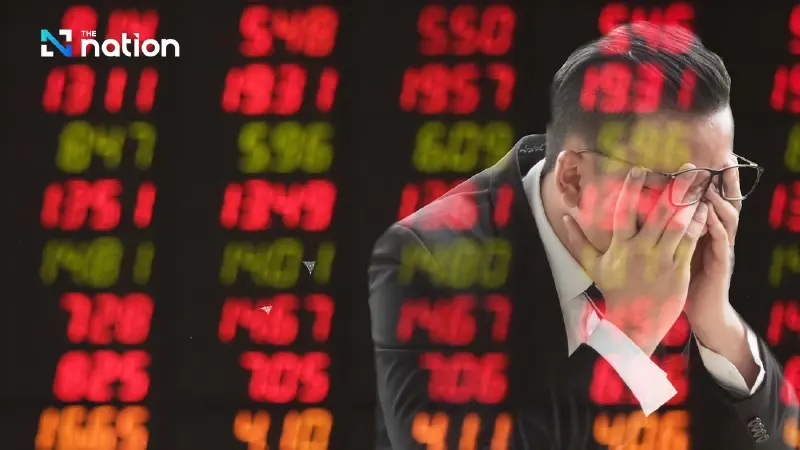
The Stock Exchange of Thailand (SET) defied a rally seen in many global markets, closing nearly 5% lower and hitting a five-year nadir.
This stark contrast to recovering international bourses, which had endured heavy losses the previous day, underscores the lingering concerns surrounding US President Donald Trump's reciprocal tariffs policy and the potential for further escalation.
The Thai bourse finished the trading day (April 8th) at 1,074.59 points, a significant drop of 50.62 points or 4.50%. Trading was volatile throughout the session, with the index fluctuating between a high of 1,083.75 points and a low of 1,056.41 points.
Turnover amounted to 66.59 billion baht, a slight improvement from the morning session, buoyed by the Cabinet's decision to slash property transfer and mortgage fees to 0.01% for homes and condominiums priced under 7 million baht until June 2026 – a move seen as positive for real estate shares.
However, analysts have attributed the ongoing decline of the Stock Exchange of Thailand (SET) to mounting concerns regarding trade tensions and tariff impositions.
Fears of escalating tariffs have intensified, particularly following China's firm declaration to "fight to the end" if the United States enacts additional 50% tariffs, warning of damaging repercussions for the American economy alongside its pledge to impose counteracting 34% tariffs.
Meanwhile, the European Union has expressed a strong interest in negotiating with the U.S., advocating for a complete elimination of tariffs on select goods, but is poised to impose 25% retaliatory tariffs on all U.S. imports should discussions falter.
This uncertainty has led many investors to temper their engagement with riskier assets or postpone their investment strategies until a more definitive resolution is reached.
In domestic news, Prime Minister Paetongtarn Shinawatra has announced a delay in the parliamentary consideration of the Entertainment Complex Bill, highlighting the need to prioritize the looming threat of U.S. tariffs.
Against this backdrop of heightened global uncertainty, unclear economic assessments, and volatile international investment conditions, coupled with the approaching Songkran long holiday, investors displayed a reluctance to take on risk.
In contrast to the SET's slump, several Asian markets staged a recovery following the previous day's sharp falls.
China's Shanghai Composite closed up 1.58%, Hong Kong's Hang Seng rose by 1.51%, and Japan's Nikkei surged by 6.03% in its fourth-largest daily gain on record, fuelled by hopes of progress in US-Japan tariff talks.
South Korea's KOSPI also edged up by 0.26%, and Australia's S&P/ASX 200 climbed by 2.27%, buoyed by signals of US willingness to negotiate trade disputes.
Looking ahead, investors will be closely watching the US Energy Information Administration's (EIA) Short-Term Energy Outlook report for insights into future crude oil price movements.
