
Thai Minister Unveils Strategy to Boost Thai Business Presence in South Korea Through Cultural Integration
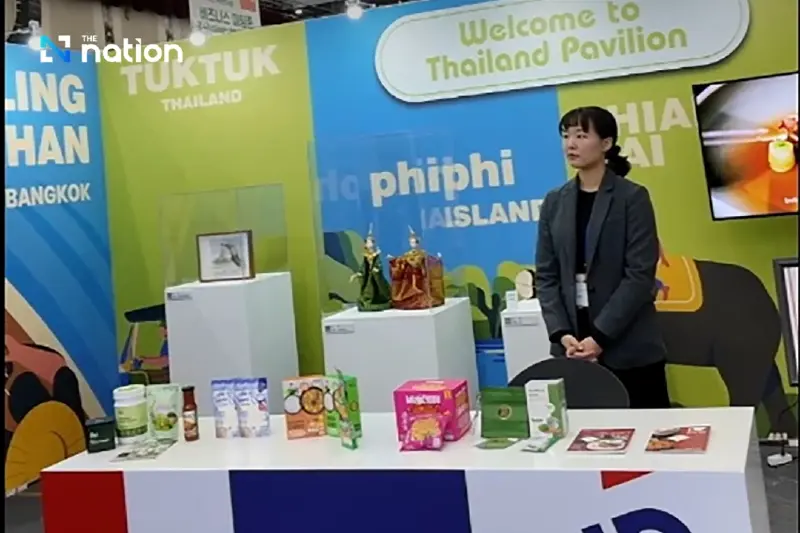


Chawadol Nipathannont outlines embassy's grassroots approach to building brand recognition as ASEAN Trade Fair opens in Seoul
- Thailand is implementing a strategy to increase its business presence in South Korea by focusing on cultural integration and community building rather than traditional trade promotion.
- The plan involves strengthening the local Thai community by facilitating the creation of legally registered associations, which can then promote Thai products and culture at Korean regional events.
- Regular cultural events, such as Thai markets and large-scale festivals, are being used as a key tool to build brand recognition and integrate Thai products into the consciousness of Korean consumers.
- The strategy also aims to leverage Thailand's "soft power," including the growing popularity of T-pop, to create a positive perception that will naturally boost all Thai sectors, from food to tourism.
Chawadol Nipathannont outlines embassy's grassroots approach to building brand recognition as ASEAN Trade Fair opens in Seoul.
Thailand is implementing a multi-faceted strategy to strengthen its commercial presence in South Korea by leveraging cultural touchpoints and community networks, according to Chawadol Nipathannont, Minister and Deputy Chief of Mission at the Thai Embassy in Seoul.
Speaking to Thai media on the sidelines of the ASEAN Trade Fair 2025 on Friday, Minister Chawadol outlined an approach that prioritises building consumer trust and brand recognition through sustained cultural engagement rather than conventional trade promotion alone.

"The Korean market presents significant opportunities for Thai food products, particularly given that over 300,000 to 400,000 Koreans visit Thailand annually and are already familiar with Thai flavours," said Minister Chawadol. "However, bringing products into Korea requires navigating health regulations and establishing reliable distribution networks. Thai entrepreneurs must thoroughly understand the regulatory requirements for their specific products."
The embassy's strategy centres on strengthening the Thai community in South Korea as a foundation for broader commercial expansion.
This includes facilitating the establishment of legally registered Thai associations and supporting regular cultural events such as Thai markets, which have gained traction amongst Korean consumers.
"We're not dictating from above but rather bringing stakeholders together, suggesting approaches, and supporting communities to build their own strength," Minister Chawadol explained. "When these associations are properly registered under Korean law, local governments approach them to participate in regional events, creating additional channels to promote Thai products, massage services, and cultural offerings."

The embassy has already seen success with events such as Sawasdee Thailand, which attracted hundreds of thousands of Korean visitors last year, and is now working to establish regular Thai markets in various locations across the country.
"We're creating multiple doors—both formal and informal, large-scale events and regular community activities," said the minister. "The goal is for Korean consumers to associate specific times with Thai cultural events, gradually integrating Thai brands into Korean consumer consciousness, particularly amongst younger generations."

Building on Soft Power Success
Whilst the strategy focuses on tangible products, Minister Chawadol acknowledged the growing influence of Thai entertainment content in South Korea.
Thai pop music (T-pop) has been developing a dedicated fanbase, with Thai artists drawing substantial crowds to fan meetings in Seoul—mirroring the passionate reception Korean artists receive in Thailand.
"The feedback has been very positive, with T-pop gradually gaining recognition," he noted. "If we can achieve the same level of admiration and trust that Korean idols receive in Thailand, everything Thai—from tourism to food products—will follow naturally without requiring separate promotional efforts for each sector."

The ultimate objective, according to Minister Chawadol, is establishing "Thai Town" in South Korea, though he emphasised this requires first building strong, legally recognised community associations that can operate independently with embassy support rather than direction.

ASEAN Trade Fair Spotlights Regional F&B Sector
The minister's comments came as the ASEAN Trade Fair 2025 opened at KINTEX Exhibition Centre 2 in Ilsan, running from 13-16 November. The event, organised annually since 2014 by the ASEAN-Korea Centre, has expanded this year to include both business-to-business (B2B) and business-to-consumer (B2C) segments.
Vietnam leads participation with 11 companies, followed by Cambodia, Indonesia, Myanmar, and Thailand with 10 companies each.
Approximately 80 booths feature across four zones, showcasing representative ASEAN specialities including kaya jam, coffee, chocolates, and dried fruits.

Kim Jae-shin, Secretary-General of the ASEAN-Korea Centre, highlighted the significance of the food and beverage sector, which accounts for approximately 17% of ASEAN's total GDP.
"The ASEAN region's F&B market is valued at over US$670 billion in 2024 and is projected to reach around US$900 billion by 2028, representing an impressive annual growth rate of about 7%," he said during Friday's opening ceremony.

Wong Kai Jiun, chairman of the ASEAN Committee in Seoul and Singapore Ambassador, noted the robust trade relationship between the two sides.
"Two-way merchandise trade between ASEAN and the Republic of Korea was over US$200 billion in 2024, an increase of 5.9% from 2023," he stated.
The ambassadors also referenced recent progress at last month's ASEAN-ROK Summit in Kuala Lumpur, where an agreement was reached to begin negotiations early next year on upgrading the ASEAN-ROK Free Trade Area.

Korea's total trade with ASEAN member states recorded US$192.8 billion in 2024, making ASEAN Korea's third-largest trading partner, whilst Korea ranks as ASEAN's fifth-largest trading partner.
