
Foreign Ministry, security agencies eye visa-free cut to curb hidden threats
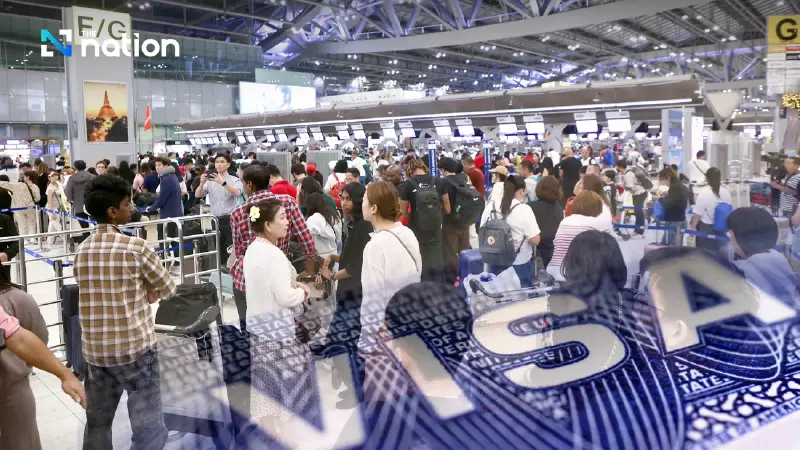


Thai security agencies are stepping up safety measures on multiple fronts as officials push to shorten visa-free stays, citing transnational crime, illegal work and terrorism risks.
The conflict in the Middle East has now entered its fourth week, with close attention focused on whether the fighting will drag on or end at the negotiating table. Beyond the economic fallout from energy shortages affecting countries worldwide, concerns over terrorism are also growing, including in Thailand.
These concerns sharpened after a senior spokesperson for Iran’s armed forces warned that resorts, tourist attractions and leisure venues around the world could no longer be considered safe.
Although Thailand maintains a friendly policy towards all countries and is not hostile to anyone, its major tourist destinations attract visitors of every nationality, prompting security agencies to tighten protection measures.
Thailand is currently facing overlapping threats from various forms of transnational crime, including scammers, online fraud, illegal immigration, money laundering, human trafficking, narcotics and terrorism.
Once the new government moves fully into office following Prime Minister Anutin Charnvirakul’s policy statement to Parliament, one urgent matter expected to go before the Cabinet will be a proposal from Foreign Minister Sihasak Phuangketkeow to scrap or scale back the 60-day visa exemption for foreign tourists introduced under former prime minister Srettha Thavisin’s administration to promote tourism.
The committee under the Ministry of Foreign Affairs responsible for visa matters believes that a 60-day stay is too long and has created loopholes for ill-intentioned individuals, including those seeking to settle in Thailand without the proper visa or to work illegally.
Officials argue that 30 days should be sufficient for most tourists. The ministry is therefore expected to propose cutting the visa-exempt stay for eligible foreign nationals from 60 days to 30 days, while still allowing them to apply for a further 30-day extension.
“This measure is not discriminatory against any country or nationality. It is also part of efforts to tackle online scam networks, as individuals linked to these operations have used long visa-exempt stays to enter Thailand and travel onwards to our neighbouring countries as well,” Sihasak said.
He added that Thailand remained fully committed to welcoming and caring for foreign tourists, while also reserving the right to close loopholes that allowed people to enter the country and engage in activities that threatened national security or were unrelated to tourism.
Security agencies said they had faced several problems under the visa-free policy, including being unable to properly verify tourists’ backgrounds or identify their permanent accommodation. When such individuals break the law, authorities are often unable to track them down.
Under normal rules, tourists can stay for 30 days and extend for another 30, bringing the total to 60 days, after which they must leave the country. Under the visa-free scheme, however, they can stay for 60 days and extend for another 30, allowing a total stay of 90 days. Officials said such lengthy stays were not beneficial to Thailand.
“The gathering of tourists of any nationality, once it becomes a trend and the numbers increase significantly, could turn into a target for rival groups involved in ongoing conflicts,” a security source said.
“Thailand does not want to become entangled in such matters. We do not want groups of any nationality to draw Thailand into external conflicts.”
A security source said some individuals were effectively hiding behind tourist status by exploiting gaps in the visa-free system and not applying for the correct type of visa.
“For example, if someone has a Thai wife, there is a requirement to show 400,000 baht in a bank account. But with visa-free entry, they can simply leave and re-enter the country and continue staying without having to show those funds. As a result, the money does not circulate in the economy as originally intended under the visa-free policy,” the source explained.
The same source said terrorist suspects could attempt to blend in with tourist groups, although screening was being conducted for travellers from all countries. Since the conflict began, commanders have instructed officers to apply particularly strict scrutiny to travellers from Middle Eastern countries, though current airspace closures mean they are largely unable to travel to Thailand at present.
At the same time, tourists from the Middle East who were already in Thailand before the unrest began have also been unable to return home because they have been unable to get flights or because their flights have been cancelled.
Once their permission to stay expires, some travel to other Southeast Asian countries such as Laos or Vietnam before returning to Thailand to secure another 90-day stay. Officials said reducing the visa-free period from 60 days to 30 days would therefore be beneficial.
For those already in Thailand, overstaying results in immediate blacklisting if detected. Those who overstay by less than one year are banned from re-entering Thailand for five years, while those who overstay by more than one year face a 10-year ban.
Authorities said all the measures were already in place, but landlords, hotel operators and accommodation providers must also report where visitors are staying. In the past, many hosts failed to do so, making it difficult for authorities to locate offenders.
Over the past decade, security agencies have monitored around 20 groups regarded as requiring close watch when entering and leaving Thailand. These individuals passed through immigration checkpoints and usually stayed in the country for around 15 to 30 days.
Authorities tracked their movements from the moment they arrived at the airport. Most were found to be visiting for leisure, meeting contacts and discussing the global situation before travelling on to other countries.
If the new Cabinet approves the Foreign Ministry’s proposal to reduce visa-free stays from 60 days to 30 days, officials believe it could help address the problem of hidden non-tourist visitors, reduce overlapping threats and terrorism risks, and prevent Thailand from being drawn into the vortex of international conflict.
