
Middle East war hits Thai food exports in first two months of 2026
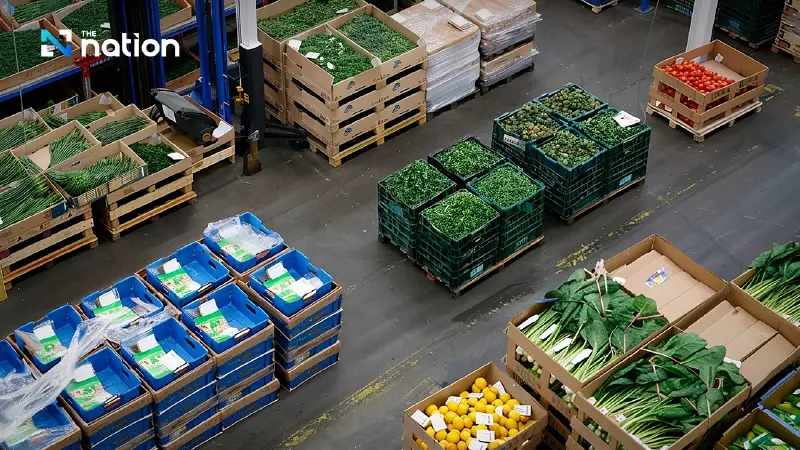


Weak global demand, US tariff uncertainty, a firmer baht and Indonesian import curbs added pressure, leaving Thai food exports down 10.5% in January-February 2026.
- Thai food exports fell by 10.5% in the first two months of 2026, though the article specifies the direct impact of the Middle East war is expected to begin in March.
- The conflict is anticipated to disrupt cargo shipments through the Strait of Hormuz, directly affecting products heavily reliant on the Middle East market, such as canned tuna, rice, and canned pineapple.
- Due to the war, exports to the Middle East are forecast to contract by 50.7% for the full year of 2026, the most severe decline of any market.
- Indirect effects from the war, such as higher energy prices, are also expected to pressure the industry by increasing costs across the supply chain, from raw materials to transport.

Wisit Limluecha, Vice Chairman of the Thai Chamber of Commerce and Chairman of the Processed Food and Future Food Committee, said on March 31, 2026, that amid weak global demand, uncertainty over US tariff policy, a stronger baht and Indonesia’s suspension of imports of staple food products, Thai food exports were expected to continue contracting in the first quarter of 2026.
The war in the Middle East is expected to begin affecting the food industry from March onwards.
In the first two months of 2026, Thai food exports were worth THB202.1 billion, down 10.5%.
The main reasons were lower consumer confidence in global markets due to concerns over the economy and trade wars, intense price competition that reduced producers’ ability to adjust prices in line with costs, and trading partners’ import restrictions and greater focus on food self-sufficiency.
Indonesia, in particular, announced that it would not import staple food products such as rice, corn and sugar this year because domestic stocks were sufficient, significantly reducing imports from Thailand.
In addition, the stronger baht made Thai products more expensive in the eyes of buyers, while falling prices for many agricultural and food products such as vegetables, fruit, coconuts and durians put pressure on export earnings.

At the same time, the Thai-Cambodian border conflict caused exports to Cambodia to fall by more than THB5 billion per month, or about 5% of total food export value.
Several key markets also contracted, including CLMV, ASEAN-5, the US, the Middle East and Japan, while markets that grew included South Asia, the European Union, the Commonwealth of Independent States (CIS) and China.
In 2025, Thai food exports were worth THB1.510066 trillion, down 8.1%, reflecting pressure from the global economic slowdown, US tariff measures, weaker purchasing power among trading partners, a stronger baht, and the Thai-Cambodian border conflict, which affected key products that Thailand relies on foreign markets to absorb.
Paiyada Hanchaisuksakul, Director of the National Food Institute, said exports of Future Food products reflected their growing role as a “new engine” of the food industry.
Over the past five years, export value expanded from THB79.525 billion in 2020 to THB134.468 billion in 2025, with average annual growth of 11.1%.
At the same time, the share of future food exports in Thailand’s total food exports continued to rise, from 7.4% in 2020 to 8.9% in 2025, reflecting the increasing importance of future food products in Thailand’s export structure.
Although there may be short-term volatility in line with global economic conditions, the export structure remains highly concentrated, relying mainly on Health & Wellness Food, which accounts for as much as 90.3% and has grown by an average of 12.6% per year.

Medical Food accounts for 4.8% and has grown by an average of 3.7%. Although it is beginning to play a bigger role, production and export potential remain limited.
By contrast, Alternative Protein accounts for 3.7% and Organic Food 1.1%, but both have slowed by an average of 0.7% and 2.5% respectively, reflecting constraints in costs, technology and market acceptance.
However, although the overall future food segment has high potential and continues to grow, its growth structure remains uneven and fragile.
Innovation, therefore, needs to be accelerated, product diversity increased, and competitiveness upgraded to strengthen Thailand’s food industry over the long term.
The overall Thai food export market in 2025 reflected a more diversified market structure.
China was Thailand’s top export market, accounting for 22.3% of all food exports, followed by ASEAN at 11.5%, the United States at 11.3% and CLMV at 10.8%.
Several important markets still contracted in line with global and regional economic conditions, including concerns over the US trade war.
Exports to China fell 11.6%, ASEAN 13.6%, CLMV 10.0%, Japan 8.9%, the Middle East 16.7% and Africa 25.2%.
Markets that still expanded were the European Union (+5.2%), South Asia (+35.5%), the United Kingdom (+1.7%) and the Commonwealth of Independent States (CIS) (+5.8%), supported by concerns over food security, especially in the European Union, which continued to increase food imports to cope with the impact of the Russia-Ukraine war.
“Over the past 20 years, Thai food export markets have clearly restructured, with Thailand relying more on regional and new markets. Their combined share has risen to 70% from 48%, with China and ASEAN as the key markets. Meanwhile, reliance on traditional developed markets such as the US, Japan and the European Union has fallen to 30% from 52%, reflecting risk diversification and Thailand’s use of opportunities from bilateral free trade agreements (FTAs) to expand exports.”
As for the position of Thai food products in the global market, it weakened slightly, against the overall trend in global food trade.
In 2025, global food trade was worth US$2.146 trillion, up 5.1%.
Food remains a defensive sector with long-term compound annual growth of 5-6% through 2034.
In 2025, Thailand was the world’s 15th-largest food exporter, with a 2.14% market share, down from the previous year, reflecting more intense competition.
For the outlook in the first quarter of 2026 (January-March), Thai food exports are expected to be worth THB305.9 billion, down 11.5%, continuing the contraction from last year.
In March, the export sector will be directly affected by the war in the Middle East, which will sever cargo shipments through the Strait of Hormuz to Gulf Cooperation Council (GCC) countries and cut off re-exports from the UAE to several countries in the Middle East and North Africa (MENA).
Products that depend heavily on the Middle East market, such as canned tuna (17.4%), rice (13.3%), prepared sweetcorn (12.4%) and canned pineapple (11.5%), are likely to be hit hardest.
Products with a moderate dependence on this market, such as chicken, instant noodles and coconut beverages (4-5%), will be less affected.
Indirect effects from higher energy prices will also be a major challenge, putting pressure on costs across the supply chain, from fertiliser prices, agricultural raw materials, processing plants and packaging to transport and distribution costs, while global demand remains weak amid economic uncertainty, rising inflation and price competition.
For the whole of 2026, Thai food exports are expected to be worth THB1.4 trillion, down 7.3%, with a severe contraction of 17.7% in the second quarter before gradually improving in the second half and recovering slightly towards the end of the year.
However, if the economic situation and the conflict in the Middle East do not escalate, the main negative factors affecting exports will still be weak global demand caused by higher energy prices, unrest in the Middle East undermining the trading atmosphere, trading partners’ import restrictions and greater food self-sufficiency, falling agricultural prices, uncertainty over US tariff policy, and the impact of the Thai-Cambodian conflict.
Export markets expected to expand include South Asia (+35%) and the European Union (+15.9%).
The market expected to contract most sharply is the Middle East (-50.7%), because most destination countries depend on cargo vessels sailing through the Strait of Hormuz.
The US market is expected to contract by 12.8%.
Last year, the impact of tariff measures on Thai food exports was not yet clear because products with a long shelf life, such as pet food, canned tuna and canned pineapple, expanded because of temporary stockpiling, while short-life products, such as rice, shrimp and ready-to-eat meals, contracted, reflecting changing behaviour among consumers and importers who rushed orders to avoid rising costs.
If stockpiling stops, the impact of tariff measures is expected to become clearer and more severe.
Other markets expected to decline are CLMV (-35.2%), ASEAN-5 (-14.0%) and Africa (-15.2%).
Nevertheless, amid the crisis, there are still opportunities from an expected weakening of the baht and rising food demand to cope with economic uncertainty and food security concerns, especially in countries located in regions facing war, which could also become a positive factor helping Thai food exports return to growth.

