
Why Warning Labels on Food Additives Deserve a Serious Look


Over the past half-century, advances in food technology, industrial agriculture, and global supply chains have made processed and ultra-processed foods widely available and affordable.
- New research links common food additives, such as synthetic dyes and preservatives, to significant health risks, including carcinogenic, neurological, and developmental effects.
- Warning labels are proposed as a practical tool to inform consumers of these risks at the point of purchase, preserve choice, and encourage the food industry to reformulate products.
- Children are considered particularly vulnerable to these health risks due to their developing biological systems and higher consumption of processed foods containing additives.
- Challenges to implementing effective labels include potential consumer confusion, "warning fatigue," and the need to avoid disproportionately impacting lower-income households that rely on affordable packaged foods.
Pimbucha Rusmevichientong
Over the past half-century, advances in food technology, industrial agriculture, and global supply chains have made processed and ultra-processed foods widely available and affordable. Today, these foods account for more than half of daily calorie intake in many high-income countries.
This shift didn’t happen by accident – and it’s not entirely negative. UPFs are convenient, have longer shelf lives that reduce food waste, and often contain fortified nutrients that help prevent deficiencies. For many households balancing work and caregiving, they are an essential part of daily life.
But convenience has come with trade-offs.
Much of the public conversation has focused on the high energy density and “empty calories” of ultra-processed foods. Yet growing concern surrounds food additives used for coloring, preservation, texture, and flavor. Although long considered safe under regulatory standards, newer research has linked additives such as potassium bromate, propylparaben, brominated vegetable oil, and synthetic dyes (e.g., Red 3, Red 40, Yellow 5, Yellow 6) to carcinogenic, developmental, neurological, behavioral, and allergic effects, particularly with repeated and combined exposure.
Children may be particularly vulnerable because their diets rely heavily on packaged snacks and beverages, while their developing biological systems may be more sensitive to environmental exposures. The potential for long-term exposure during critical developmental windows is enough to warrant attention.
Policy responses are beginning to reflect these concerns. Some countries are restricting or banning specific additives, while others are exploring disclosure or warning labels. However, removing additives from the food supply is complex, often requiring years of regulatory review, industry reformulation, and scientific and legal debate.
Warning labels are increasingly entering the conversation in regions such as the European Union and South America. In the United States, Texas recently passed a law requiring warning labels for certain food additives, although it is currently under legal challenge, and other states are considering similar approaches.
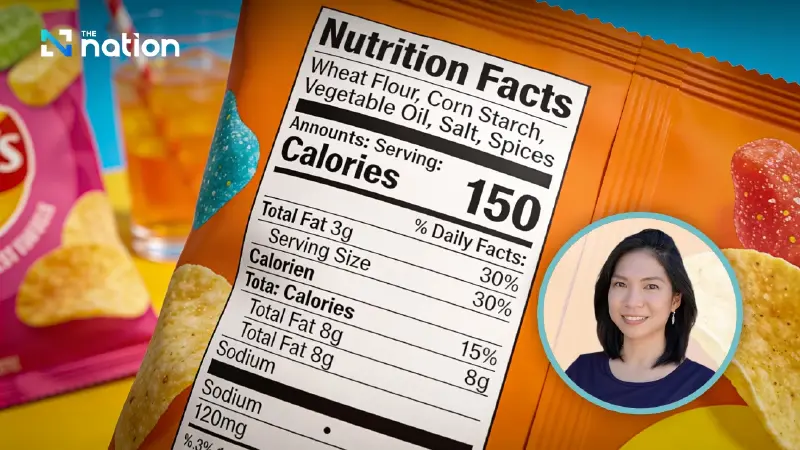
Warning labels are not new. They have been used on tobacco, alcohol, and sugary beverages to make health risks more visible at the point of purchase. Applied to food additives, supporters argue they are a practical and scalable tool that can preserve consumer choice while encouraging industry reformulation and informing consumer decisions.
Critics, however, raise valid concerns. Poorly designed labels may confuse consumers or create “warning fatigue,” where too many labels reduce their impact. If not carefully implemented, such policies could also disproportionately affect lower-income households that rely more heavily on affordable packaged foods.
The challenge, then, is not whether to act - but how.
As policymakers consider next steps, the goal should be to design warning labels that are clear, evidence-based, and effective across diverse populations. Done well, they could serve as a meaningful bridge – providing transparency now while longer-term regulatory solutions continue to evolve.
In a food environment increasingly shaped by industrial processing, making the invisible visible may be one of the most important steps we can take.
Pimbucha Rusmevichientong, Ph.D., is an associate professor of Public Health at California State University, Fullerton. Her research focuses on behavioral economics, food labeling, and public health policy, including how warning labels and consumer information influence food purchasing decisions and health behaviors.
